概要
キーごとの件数が欲しいだけなのに、GroupBy は各キーに対応する要素リストを丸ごとメモリ上に構築する。
集計結果として最終的に残るのは「キーと数値の対」だけであり、グルーピングされた要素本体は捨てられる。
.NET 9 で追加された CountBy・AggregateBy は、この中間グルーピングを省き、キーごとの状態だけを辞書に保持して集計する演算子である。
あわせて追加された Index は、Select((x, i) => …) で書いていたインデックス付き列挙を専用メソッド化したものである。
本記事では、これら 3 メソッドを .NET Framework 環境へバックポートする。
主題は「ポリフィルの内部を GroupBy への委譲で済ませず、本家と同じ辞書ベースの集計で実装する」ことの意味である。
委譲実装と辞書実装ではメモリ効率だけでなく null キーの挙動まで変わるため、両者の差を比較しながら実装を組み立てる。
前提・対象環境
- フレームワーク: .NET Framework 4.8(バックポート先)/ .NET 9+(将来の移行先)
- 対象: LINQ の 3 メソッド(CountBy / AggregateBy / Index)と各オーバーロード
- 方針:
#nullable enableを適用し、#if !NET9_0_OR_GREATERで移行時に自動無効化する - 言語バージョン:
#nullable enableとwhere TKey : notnullは C# 8.0 以上を必要とする。.NET Framework 4.8 の既定は C# 7.3 のため、.csprojのLangVersionを8.0以上に設定する - 検証環境: .NET 10 / Windows 11
本記事のポリフィル実装は、上記の環境で net48 と net10.0 の両方に対してビルドして実行し、出力を突き合わせて確かめている。
net10.0 では移行ガードの #if によってポリフィルが無効になり、BCL の実装が使われる。
この環境で確認しているのは次の点である。
CountBy/AggregateByが返すキーは、最初に現れた順に並ぶ。Indexが返すタプルの中身と、空の並びに対する結果は、両ターゲットで一致する。
問題: GroupBy 集計の隠れた割り当て
.NET 9 で追加された以下のメソッドは、.NET Framework 環境では使用できない。
| メソッド | 追加されたバージョン | 概要 |
|---|---|---|
CountBy |
.NET 9.0 | キーごとに要素数を数え、KeyValuePair<TKey, int> の列として返す |
AggregateBy |
.NET 9.0 | キーごとに累積計算を行い、KeyValuePair<TKey, TAccumulate> の列として返す |
Index |
.NET 9.0 | 各要素にインデックスを付与し、(int Index, TSource Item) タプルの列として返す |
これらが無い環境で同等の集計を書くと、GroupBy を経由することになる。
// キーごとの件数を GroupBy で集計する
var counts = words.GroupBy(w => w)
                  .Select(g => new { g.Key, Count = g.Count() });
このコードの見えないコストが中間グルーピングである。
GroupBy は列挙開始時に全要素を走査し、キーごとに「そのキーに属する全要素への参照リスト」を構築する。
件数を数えるだけの用途では各グループの要素リストは最終的に捨てられるが、Count() を呼んだ直後に解放されるわけではなく、GroupBy が返すシーケンス全体の列挙が完了する(全キーのグループを構築し終える)まで内部に保持され続ける。
要素数 100 万件・キー数 10 件のデータであれば、10 件の結果を得る間ずっと、100 万件分の参照を保持するグルーピングがメモリ上に残る。
Index の代替も同様に、Select((item, index) => (index, item)) という定型記述を毎回書くことになる。
こちらはコストの問題ではなく、意図(インデックスが欲しいだけ)が記述に埋もれる問題である。
原因・背景
GroupBy が要素リストを構築するのは、IGrouping<TKey, TSource> として「キーごとの要素列」を返す契約だからであり、GroupBy 自体の欠陥ではない。
問題は、集計しか必要ない場面でもこの契約のコストを払っていたことにある。
.NET 9 の CountBy・AggregateBy は「キーごとの状態(件数や累積値)だけを保持すればよい」という集計専用の契約を導入し、内部では Dictionary にキーごとの状態のみを積んで結果を返す。
この内部辞書の性質上、本家はいずれも where TKey : notnull 制約を課し、キーに null が渡ると列挙時に例外を投げる。
解決方法: GroupBy 委譲ではなく辞書への直接集計
ポリフィルの内部実装には 2 つの選択肢がある。
// 選択肢 A: GroupBy へ委譲する素朴な実装
public static IEnumerable<KeyValuePair<TKey, int>> CountBy<TSource, TKey>(
    this IEnumerable<TSource> source, Func<TSource, TKey> keySelector)
    => source.GroupBy(keySelector)
             .Select(g => new KeyValuePair<TKey, int>(g.Key, g.Count()));
選択肢 A は短く書けるが、2 つの点で本家と一致しない。
| 観点 | GroupBy 委譲(A) | 辞書への直接集計(B・本記事) | 本家 .NET 9 |
|---|---|---|---|
| メモリ | キーごとの要素リストを構築 | キーごとの状態のみ保持 | キーごとの状態のみ保持 |
null キー |
1 グループとして許容 | 列挙時に ArgumentNullException |
列挙時に ArgumentNullException |
GroupBy は null キーを 1 つのグループとして受け入れるため、委譲実装は本家なら例外になる入力を黙って通してしまう。
ポリフィルの目的が「移行時に挙動を変えないこと」である以上、メモリ効率だけでなく例外挙動の一致という点でも、本家と同じ辞書ベースの実装(選択肢 B)を採る。
あわせて、遅延評価を保ったまま引数検証を即時化するため、public メソッドと yield return を含むイテレータ本体を分離する(根拠はシリーズ基礎編の設計原則 1を参照)。
Index だけは集計を伴わないため、Select のインデックス付きオーバーロードへの委譲で足りる。
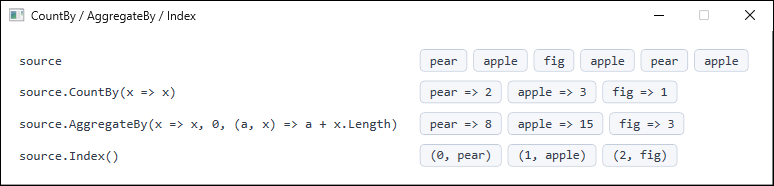
CountBy と AggregateBy はキーごとに 1 件へ畳み込むのに対し、Index は要素数を変えずに添字を添える。Index() の行は先頭 3 件のみ表示している。実装例
以下は 3 メソッド(AggregateBy の seed 版・seedSelector 版を含む計 4 シグネチャ)のポリフィル実装一式である。
プロジェクトに LinqExtensions.Net9.cs などの名前でそのまま追加して使用できる。
#nullable enable

using System;
using System.Collections.Generic;

#if !NET9_0_OR_GREATER // .NET 9.0 以降ではない環境(.NET Framework など)のみ有効化

namespace System.Linq
{
    /// <summary>
    /// .NET 9.0 で追加された LINQ メソッドを古いターゲットフレームワーク向けに補完する拡張メソッドを提供します。
    /// </summary>
    public static partial class LinqExtensions
    {
        // ==========================================
        // 1. CountBy
        // ==========================================
        public static IEnumerable<KeyValuePair<TKey, int>> CountBy<TSource, TKey>(
            this IEnumerable<TSource> source,
            Func<TSource, TKey> keySelector,
            IEqualityComparer<TKey>? keyComparer = null)
            where TKey : notnull
        {
            if (source == null) throw new ArgumentNullException(nameof(source));
            if (keySelector == null) throw new ArgumentNullException(nameof(keySelector));

            return CountByIterator(source, keySelector, keyComparer);
        }

        private static IEnumerable<KeyValuePair<TKey, int>> CountByIterator<TSource, TKey>(
            IEnumerable<TSource> source,
            Func<TSource, TKey> keySelector,
            IEqualityComparer<TKey>? keyComparer)
            where TKey : notnull
        {
            var counts = new Dictionary<TKey, int>(keyComparer);
            foreach (var item in source)
            {
                TKey key = keySelector(item); // key が null の場合、次行で ArgumentNullException
                counts.TryGetValue(key, out int count);
                counts[key] = checked(count + 1); // 本家 .NET 9 同様、int.MaxValue 超過で OverflowException
            }

            foreach (KeyValuePair<TKey, int> entry in counts)
            {
                yield return entry;
            }
        }

        // ==========================================
        // 2. AggregateBy(seed 版 / seedSelector 版)
        // ==========================================
        public static IEnumerable<KeyValuePair<TKey, TAccumulate>> AggregateBy<TSource, TKey, TAccumulate>(
            this IEnumerable<TSource> source,
            Func<TSource, TKey> keySelector,
            TAccumulate seed,
            Func<TAccumulate, TSource, TAccumulate> func,
            IEqualityComparer<TKey>? keyComparer = null)
            where TKey : notnull
        {
            if (source == null) throw new ArgumentNullException(nameof(source));
            if (keySelector == null) throw new ArgumentNullException(nameof(keySelector));
            if (func == null) throw new ArgumentNullException(nameof(func));

            return AggregateByIterator(source, keySelector, key => seed, func, keyComparer);
        }

        public static IEnumerable<KeyValuePair<TKey, TAccumulate>> AggregateBy<TSource, TKey, TAccumulate>(
            this IEnumerable<TSource> source,
            Func<TSource, TKey> keySelector,
            Func<TKey, TAccumulate> seedSelector,
            Func<TAccumulate, TSource, TAccumulate> func,
            IEqualityComparer<TKey>? keyComparer = null)
            where TKey : notnull
        {
            if (source == null) throw new ArgumentNullException(nameof(source));
            if (keySelector == null) throw new ArgumentNullException(nameof(keySelector));
            if (seedSelector == null) throw new ArgumentNullException(nameof(seedSelector));
            if (func == null) throw new ArgumentNullException(nameof(func));

            return AggregateByIterator(source, keySelector, seedSelector, func, keyComparer);
        }

        private static IEnumerable<KeyValuePair<TKey, TAccumulate>> AggregateByIterator<TSource, TKey, TAccumulate>(
            IEnumerable<TSource> source,
            Func<TSource, TKey> keySelector,
            Func<TKey, TAccumulate> seedSelector,
            Func<TAccumulate, TSource, TAccumulate> func,
            IEqualityComparer<TKey>? keyComparer)
            where TKey : notnull
        {
            var accumulators = new Dictionary<TKey, TAccumulate>(keyComparer);
            foreach (var item in source)
            {
                TKey key = keySelector(item); // key が null の場合、次行で ArgumentNullException
                if (!accumulators.TryGetValue(key, out var acc))
                {
                    acc = seedSelector(key);
                }
                accumulators[key] = func(acc!, item);
            }

            foreach (KeyValuePair<TKey, TAccumulate> entry in accumulators)
            {
                yield return entry;
            }
        }

        // ==========================================
        // 3. Index
        // ==========================================
        public static IEnumerable<(int Index, TSource Item)> Index<TSource>(
            this IEnumerable<TSource> source)
        {
            if (source == null) throw new ArgumentNullException(nameof(source));

            return source.Select((item, index) => (index, item));
        }
    }
}

#endif
この実装が標準 LINQ と同じ結果を返すかは、同じ呼び出しコードを net48(ポリフィル有効)と net10.0(組み込みが有効)の両方でビルドして実行し、出力を突き合わせて確かめられる。
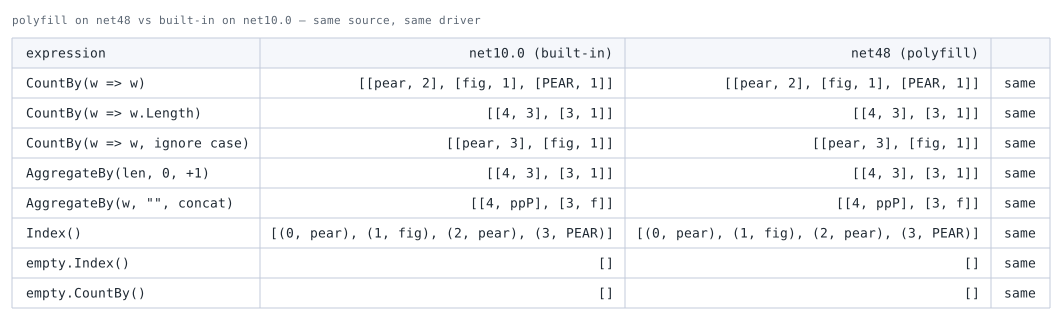
net48 でビルドしたものと、#if により組み込みへ切り替わる net10.0 でビルドしたものを、同一のドライバーで実行して比較した結果。.NET SDK 10.0.302 で測定した。この入力とこの実行環境では、どちらもキーが最初に現れた順に並んだ。出力はその順序まで含めて一致している。
ただし、この順序は API として保証されているものではない。
CountBy と AggregateBy はいずれも Dictionary<TKey, TValue> を列挙して結果を返すため、列挙順は実装に依存する。
順序に意味を持たせる場合は、呼び出し側で明示的に並べ替える。
コンパイル時に NET9_0_OR_GREATER シンボルが定義されていない環境(.NET Framework を含む .NET 9 未満の環境)でのみ、上記クラスが有効になる。
AggregateBy の seed 版は、初期値を返すだけの seedSelector(key => seed)に読み替えて共通の集計本体へ委譲している。
各メソッドの動作
CountBy: キーごとの件数
CountBy はキーセレクタが返すキーごとに要素数を数え、KeyValuePair<TKey, int> の列として返す。
var words = new[] { "apple", "banana", "apple", "cherry", "banana", "apple" };

foreach (var pair in words.CountBy(word => word))
{
    Console.WriteLine($"{pair.Key}: {pair.Value}");
}
// apple: 3
// banana: 2
// cherry: 1
結果の列挙順は保証されない。
内部で用いる Dictionary<TKey, TValue> の列挙順は API 契約として規定されていないため、特定の順序(初出順など)に依存してはならない。
決まった順序が必要な場合は、結果を明示的に並べ替えるか、順序を保持するコレクションへ変換する。
IEqualityComparer<TKey> を渡すオーバーロードでは、大文字・小文字を区別しない集計などに比較方法を差し替えられる。
AggregateBy: キーごとの畳み込み
AggregateBy は Aggregate のキー別版であり、キーごとに独立した累積計算を行う。
以下は地域ごとの売上合計を求める例である。
var sales = new[]
{
    ("Tokyo", 100),
    ("Osaka", 80),
    ("Tokyo", 120),
    ("Osaka", 60),
};

var totals = sales.AggregateBy(
    keySelector: s => s.Item1,
    seed: 0,
    func: (total, s) => total + s.Item2);

foreach (var pair in totals)
{
    Console.WriteLine($"{pair.Key}: {pair.Value}");
}
// Tokyo: 220
// Osaka: 140
初期値をキーごとに変えたい場合は、seed の代わりに seedSelector(Func<TKey, TAccumulate>)を受け取るオーバーロードを使う。
キーに応じて異なる初期状態から畳み込みを開始できる。
Index: インデックス付き列挙
Index は各要素に 0 始まりのインデックスを付与し、(int Index, TSource Item) タプルの列として返す。
var items = new[] { "a", "b", "c" };

foreach (var (index, item) in items.Index())
{
    Console.WriteLine($"{index}: {item}");
}
// 0: a
// 1: b
// 2: c
タプルの第 1 要素がインデックス、第 2 要素が値である。
Select((item, index) => ...) のラムダとは引数の順序が逆になる点に注意する(Index はインデックスが先)。
遅延評価と例外のタイミング
3 メソッドはいずれも遅延評価であり、foreach や .ToList() の時点で初めて計算が実行される。
一方、source や各デリゲートが null の場合の ArgumentNullException は、呼び出し時点で即座に投げられる。
IEnumerable<int> numbers = null!;

// 列挙する前に、この行で即座に ArgumentNullException が投げられる
var query = numbers.CountBy(n => n);
キーセレクタが列挙中に null キーを返した場合の ArgumentNullException は、内部辞書へそのキーで参照・格納しようとした時点(TryGetValue の呼び出し)で投げられる。
これは本家 .NET 9 の挙動(内部辞書が null キーを拒否する)と一致する。
移行ガード
本ポリフィルは #if !NET9_0_OR_GREATER で囲む。
CountBy・AggregateBy・Index は .NET 8 以前に存在しないため、!NETCOREAPP や !NET8_0_OR_GREATER を条件にすると .NET 8 向けビルドでポリフィルが無効化され、コンパイルエラーになる。
シンボル選択の一般規則(追加されたバージョン以上で無効化する)は.NET 6 メソッドのバックポート記事で整理している。
注意点
- 結果は遅延列であり、列挙のたびに再集計される: 戻り値は
Dictionaryではなく遅延列である。同じ結果を複数回使う場合は.ToList()や.ToDictionary()で実体化しないと、そのつどソースの走査と集計をやり直す。 - キー型は
notnull: 本家と同じくwhere TKey : notnull制約を付けており、実行時にnullキーが現れた場合は列挙時にArgumentNullExceptionを投げる。nullキーを集計対象にしたいデータでは、キーを事前に変換(?? "(none)"など)してから渡す。 CountByのオーバーフロー: 計数はchecked(count + 1)で行うため、あるキーの件数がint.MaxValueを超えるとOverflowExceptionを投げる。本家 .NET 9 もcheckedで加算するため、この挙動は一致する。Indexとタプル順序 / 型名の紛らわしさ:Indexが返すタプルは(Index, Item)の順であり、インデックスが先である。また、メソッド名Indexは C# 8 で導入されたSystem.Index型と名称が紛らわしいが、型とメソッドであり衝突はしない。
代替案・比較
| 方法 | メリット | デメリット | 適するケース |
|---|---|---|---|
| 辞書ベースのポリフィル(本記事) | 本家と同じメモリ特性・例外挙動 | 実装がやや長い | 移行時に挙動を変えたくない場合 |
GroupBy への委譲ポリフィル |
実装が数行で済む | 中間グルーピングを割り当てる・null キーの挙動が本家と異なる |
挙動差を理解したうえで暫定利用する場合 |
GroupBy(...).Select(...) を直書き |
追加コード不要 | 記述が冗長・移行時に一括置換が必要 | 使用箇所が少なく移行予定もない場合 |
| .NET 9 へのアップグレード | 根本的解決・割り当て削減の恩恵を受けられる | 移行コストが発生する | 移行が技術的・ビジネス的に許容できる場合 |
まとめ
CountBy・AggregateBy のバックポートで問われるのは、「同じ結果を返すこと」ではなく「同じやり方で返すこと」である。
GroupBy へ委譲しても結果の値は一致するが、中間グルーピングの割り当てと null キーの許容という 2 点で本家から乖離する。
辞書への直接集計で実装すれば、メモリ特性・例外挙動・where TKey : notnull 制約のすべてが本家と揃い、#if !NET9_0_OR_GREATER による移行時の無修正切り替えが安心して成立する。
| メソッド | 実装方式 | 保持する状態 |
|---|---|---|
CountBy |
辞書への直接集計 | キーごとの件数のみ |
AggregateBy |
辞書への直接集計 | キーごとの累積値のみ |
Index |
Select への委譲 |
なし(パススルー) |
大量データのキー集計を .NET Framework で日常的に書いているなら、GroupBy 直書きの継続よりも本ポリフィルの導入が割り当て削減と移行準備を兼ねる選択になる。